
VITO at COP30: What Changed – And Why It Matters
COP30 in Bélem was not business as usual.
Ten years after the Paris Agreement, the central question was no longer what should be done – but how fast ambition can turn into action.
The context was challenging: geopolitical tension, mounting climate impacts, and a growing urgence for measurable results. Expectations were high. And while not every though decision was taken, COP30 achieved meaningful progress, particularly on adaptation, health, nature and climate finance, and energy transitions.
So, what does this mean in practice for policymakers, companies and investors? And where does VITO fit in?
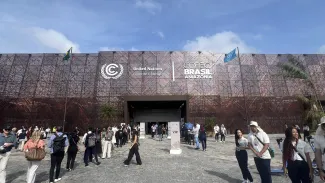
COP30: What Really Changed
Adaptation Takes the Lead
COP30 made its most significant advances in climate adaptation. Countries committed to triple global adaptation finance by 2035 and agreed on 59 global indicators to track resilience progress. These cover climate risk reduction, early warning systems, health resilience, water and food security, and governance capacity.
Governments will have a clear, comparable, and actionable way to measure what works - moving adaptation from promises to measurable progress.
Health Moves to the Centre
The Belém Health Action Plan (BHAP) is the first global framework dedicated to tackling climate-related health risks. It sets up climate-health surveillance, strengthens health system preparedness, and encourages innovation for climate-resilient care. Priority areas include heatwaves, vector-borne diseases (illnesses caused by pathogens transmitted to humans or animals through vectors, typically insects like mosquitoes, ticks, or fleas), air quality, and climate-driven food and water risks.
To support action, 35 philanthropic organisations pledged USD 300 million. Health is no longer a side issue - it is now a central pillar of climate policy.
A New Push to Fund Climate Action
The Baku–Belém Climate Finance Roadmap aims to mobilise USD 1.3 trillion annually for climate action in developing countries by 2030. It broadens the contributor base to include high-emitting emerging economies and proposes financial institutions reforms to lower borrowing costs.
The roadmap promotes blended finance, stronger project pipelines, and de-risking mechanisms to attract private investment. It also introduces debt safeguards for countries facing climate shocks.
While politically sensitive, it represents a concrete step toward the long-awaited systemic finance reform.
Forests, Nature & the Bioeconomy
With the Amazon hosting COP30, forests and biodiversity were at the heart of discussions. Countries launched the Amazon Resilience Partnership and committed to more transparent reporting on nature-based solutions and nature-positive impacts in national climate action plans (NDCs).
Even though a global deal to stop deforestation wasn’t reached, there was growing momentum for regenerative farming, Indigenous-led conservation, and circular bioeconomy approaches. Sustainable biomass and better land-use planning were seen as key for both reducing emissions and building resilience. Nature has never been such a central focus in COP climate discussions.
Energy Transition and Just Transition Pathways
COP30 reaffirmed the global commitment to triple renewable energy capacity and double energy efficiency improvements by 2030. Negotiators agreed that countries must develop national Just Transition Plans to address the social, economic, and regional impacts of the energy shift.
The agreement emphasised an “orderly and equitable” transition with dedicated support for fossil fuel–dependent regions. While a global fossil fuel phase-out agreement was not reached, the coalition backing stronger commitments grew larger and more influential than ever.
Toward More Ambitious and Measurable Climate Action Plans
Countries were encouraged to submit more ambitious and measurable climate action plans (NDCs). The updated guidelines ask them to combine mitigation, adaptation, and finance into one clear plan, with science-based indicators, sector-specific pathways, and concrete steps for implementation.
Countries also need to align their 2030 and 2035 targets with long-term climate strategies.
These changes make climate commitments more accountable, transparent, and comparable - turning climate promises into concrete and measurable actions.
What COP30 Did Not Deliver
Despite meaningful progress, COP30 fell short on several key expectations. No global agreement was reached to phase out fossil fuels, and new climate finance commitments remain unclear on who will pay and how funds will reach the most vulnerable communities.
Stronger commitments to protect the Amazon were also missing, and progress on the Loss & Damage Fund, which is meant to help countries hit by climate disasters, was limited.
These gaps make one thing clear: while ambition is growing, the urgent actions needed this decade are still falling behind.
What COP30 Means for VITO
COP30 opens new opportunities for VITO to support governments, regions, and organisations in turning global climate commitments into real-world action. The focus on adaptation, health resilience, and nature-based solutions fits directly with VITO’s expertise in climate risk modelling, environmental intelligence, digital twins, and creating healthier living environments.
The new climate-health frameworks and adaptation indicators highlight the need for strong data systems, early-warning tools, and integrated monitoring - areas where VITO already leads. At the same time, the expanded climate finance roadmap shows the importance of solid project pipelines, feasibility assessments, and innovation ecosystems, reinforcing VITO’s role as a trusted partner for policymakers, industry, and investors.
As countries aim for more ambitious and measurable climate action plans (NDCs), VITO’s scenario modelling, system analysis, and integrated planning tools will be crucial for transparent, science-based decision-making.
In short, COP30 confirmed the way forward: the future of climate action relies on implementation, adaptation, and innovation ecosystems - precisely where VITO delivers measurable impact.
VITO at COP30: Building Partnerships and Driving Innovation
Beyond formal negotiations, COP30 highlighted the growing role of civil society, industry, and research s in shaping commitments and turning ambition into action.
Even with a smaller delegation, VITO’s focus was clear: build partnerships, showcase solutions, and accelerate implementation.
Belgium-Brazil Pre-COP Event on Bioeconomy
Ahead of the summit, VITO co-organised a Belgian–Brazilian bioeconomy event in Rio with partners including VIB, Firjan/SENAI, FIT, and hub.brussels. Over 35 experts explored how bioeconomy can drive climate mitigation, inclusive development, and circular value creation. Discussions included:
- climate-neutral bio-based production
- circular and systemic value chains
- community-led forestry and agroforestry
- biorefineries and innovation hubs
- financing mechanisms for sustainable biomass
The event translated COP30 priorities - nature-positive solutions, regenerative systems, circularity, and climate-aligned development - into concrete collaboration pathways.
Strategic Engagement and Science Diplomacy
Maarten Pelgrims represented VITO throughout COP30, strengthening collaborations across ministries, research bodies, development s and climate finance institutions - laying the foundation for future joint work in adaptation, circularity and sustainability transitions.
Advancing G-STIC’s Mission
COP30 also reinforced momentum for G-STIC as a platform bridging technology, policy, and implementation. Bilateral meetings highlighted opportunities to scale technology deployment, strengthen capacity-building, and mobilise finance for impact-driven climate solutions.
Dietrich Van der Weken, representing G-STIC, had bilateral exchanges with the UNFCCC, CTCN and IDRC highlighted opportunities for G-STIC to contribute more directly to technology deployment and capacity building, while conversations with WIPO GREEN, GGGI, Fiocruz reinforced a shared commitment for collaborative innovation and knowledge partnerships. Engagements with IKI, the Mitigation Action Facility and the Adaptation Fund underscored clear pathways for mobilising finance toward scalable, impact-driven solutions. Meanwhile, discussions with SDSN, GeSI, the International Science Council and the Belmont Forum reaffirmed the importance of science-based decision-making and multi-stakeholder cooperation.
VITO’s presence was not just symbolic - it demonstrated how a research and innovation can turn science into actionable solutions, connect stakeholders across sectors, and ensure that global ambitions lead to measurable results.
Looking Ahead: Science-Based Leadership for Real-World Impact
COP30 highlighted the importance of reducing emissions, focusing on everything from cutting carbon in industry and energy systems, to speeding up the use of renewable energy and expanding technologies that remove carbon from the atmosphere.
Science, technology, and innovation will determine how fast the world transitions to climate neutrality.
COP31, hosted in Antalya, Türkiye, will follow a unique governance setup: Türkiye will serve as the official COP Presidency, while Australia will lead the negotiation process. This dual approach lets Türkiye guide the political direction, regional priorities, and overall action agenda, while Australia manages the technical and diplomatic work before and during the summit.
Early indications show COP31 will face a packed agenda, including putting the new Climate Finance Roadmap into action beyond 2035, advancing the Global Goal on Adaptation with clearer national plans, speeding up nature-positive land and ocean initiatives, and finalising new cooperative approaches under Article 6, which are still unresolved.
In this changing context, it is important for leading research and innovations, like VITO, to stay involved in the COP process. These gatherings are where scientific evidence, technology solutions, and implementation partnerships are developed. Staying engaged ensures that science-based insights inform policy decisions and help turn global commitments into real-world action.