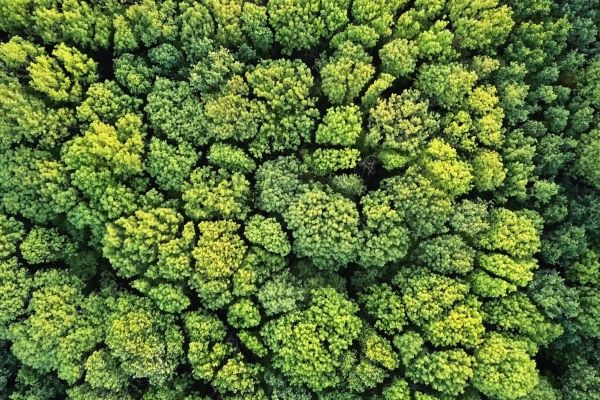
Habitat Mapping is a key tool to assess progress towards the European Biodiversity 2030 targets as well as the global Aichi targets and more particular the EU Habitats Directive and the Nature Restoration Law. Many initiatives have already been taken in Europe, ranging from local to national scale. However at European scale, habitat maps remain limited to very coarse spatial resolution of 1 km to 10 km and are often only a prediction of the suitability of the habitat instead of a hard classification. Recent advances in Machine Learning and Artificial Intelligence, in combination with the high resolution Earth Observation data and derived Remote Sensing-enabled Essential Biodiversity Variables, improve Habitat Mapping which can be directly used for policies as restoration law, pollination initiative, preserving Europe’s natural capital.
Blog post by Bruno Smets
Read more