
Natural Capital Accounting
Nature is indispensable to our economy. Various sectors rely on natural resources, but also have a significant impact on them. Natural Capital Accounting, or ecosystem accounting, quantifies these effects. VITO develops methodologies and offers services for the full implementation of Natural Capital Accounting. On behalf of Eurostat and in collaboration with the Joint Research Centre, VITO developed the reference methodology for European ecosystem accounts. VITO also makes Natural Capital Accounting applicable to industry.
Where nature and the economy meet
Ecosystems provide essential services to the economy and society. They purify water, regulate the climate, store carbon, protect soils from erosion, support air quality, enable pollination and provide space for recreation. They also supply natural resources such as water and biomass. Yet for a long time, these contributions were not systematically measured.
Natural Capital Accounting (NCA) is changing that. It makes nature visible, measurable, trackable and reportable through a standardised accounting framework.
What is Natural Capital Accounting?
Natural Capital Accounting (NCA) answers three key questions:
-
Where is nature located?
-
What is its condition and quality?
-
What services does it provide to the economy and society?
Natural Capital Accounting translates ecological information into consistent tables, maps and indicators. This makes nature systematically comparable, trackable and reportable over the years, and useful for strategic decisions. The United Nations has adopted an internationally recognised standard for ecosystem accounting (SEEA-EA), which forms the basis for ecosystem accounts in the European Union and in VITO’s NCA approach, amongst other things.
Any reliable ecosystem accounting starts with one fundamental step: mapping out what is there.
The foundation: habitat mapping
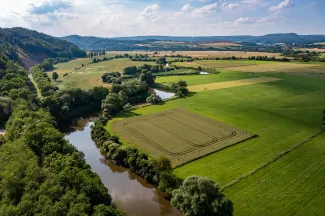
Ecosystems function at a local level. Their value, vulnerability and contribution to economic activity are always site-specific. That is why Natural Capital Accounting starts with habitat mapping: the precise mapping of ecosystems.
Through earth observation, advanced spatial analysis and the integration of machine learning and artificial intelligence, VITO identifies:
-
which habitat types are present
-
their condition and quality
-
how ecosystems are evolving
-
where ecosystems are under pressure
-
how nature and economic activities are spatially interlinked
This spatial foundation forms the starting point for consistent measurement and reporting. Without reliable mapping, there can be no substantiated ecosystem accounting.
Ecosystem services: physical and economic value
Once the location and quality of ecosystems are known, we translate this information into the services and benefits they provide to our society. VITO quantifies these ecosystem services both in physical terms, such as volumes and areas, and in economic terms, such as market values and shadow prices.
Many ecosystem services do not have a market price, but that does not mean they have no value. We distinguish between two types of value:
-
use value, such as direct benefits from nature and indirect cost savings for society
-
non-use value, such as the value we attach to the existence of plants and animals and to what nature can offer future generations
By taking both dimensions into account, we can quantify the total economic value of ecosystems. These insights support policymakers and businesses in making informed choices for nature and society.
INCA: European benchmark for Natural Capital Accounting
To make ecosystem accounts operational, VITO developed the INCA toolbox and the INCA handbook (Integrated Natural Capital Accounting) on behalf of Eurostat and in collaboration with the Joint Research Centre (JRC).
The INCA tools support European Member States in compiling official ecosystem accounts in line with the international standard.
The toolbox:
-
translates habitat and ecosystem data into standardised calculation models
-
combines maps with standardised summary tables
-
supports multiple ecosystem services
-
facilitates consistent and comparable reporting
INCA is used across Europe as the reference approach for ecosystem accounting.
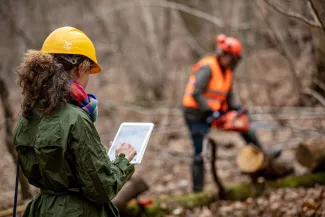
From development to implementation in Europe and worldwide
VITO not only laid the foundations for the INCA methodology, but also supports Member States and the European Commission in its practical application, including through:
-
technical implementation
-
integration of national and regional datasets
-
training and capacity building
-
methodological guidance
-
alignment of reporting with European standards
-
quality control of submitted reports
In this way, VITO makes ecosystem accounting a practical tool within the official operations of various European Member States.
For international organisations such as IUCN, UNEP and the World Bank, VITO has already applied ecosystem accounting in Madagascar, West Africa and Turkey. In addition, VITO is using its expertise to implement ecosystem accounting more widely. For example, we support countries in integrating biodiversity values into their policies, including by providing tools for setting, reporting on and monitoring national targets within the Global Biodiversity Framework (GBF).
Innovation as a catalyst
Natural Capital Accounting is evolving rapidly. Through European and international innovation projects, we are strengthening methodology, data and scalability.
-
The PEOPLE-EA project systematically integrates satellite data into ecosystem accounting and develops scalable solutions to measure ecosystems and their services more accurately and efficiently. More info >
-
The SELINA project develops tools and guidelines to better integrate biodiversity, ecosystem services and natural capital into decision-making and supports applications in policy and the business world. More info >
-
The WEED project is developing a globally applicable toolbox that uses earth observation to map ecosystems and changes within them, thereby supporting policy and ecosystem management. More info >
-
The SONATA project is developing data-driven tools and methodologies to better integrate nature-based solutions into land use and decision-making. More info >
-
A-Track brings together existing tools, data and methodologies to make publicly available nature data more accessible and usable for decision-making in policy, the financial sector and, in particular, the business world. More info >
These initiatives strengthen the building blocks for making ecosystem accounting scalable and applicable outside the public sector as well.
From European standard to application in the business world
The ecosystem accounting methodology is now firmly established in public contexts. The challenge now is to make this approach applicable to business decisions and thus to systematically incorporate natural capital into strategy and investment.
Businesses operate within ecosystems, depend on natural resources and, at the same time, have an impact on them. Insight into
-
the spatial relationship between activities and habitats on and around business sites
-
the state of nature around production sites
-
changes in the presence and quality of ecosystems
-
long-term developments in natural systems
-
ecosystem services and their value
supports strategic choices regarding location, risk management and investments.
Building on its role as a European reference centre, VITO works with companies to further develop Natural Capital Accounting for applications within industry.
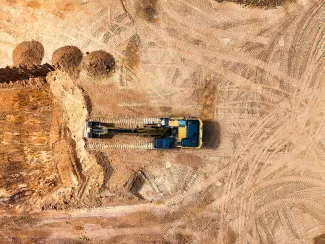
Our expertise for industry
Drawing on our experience, we offer:
-
accurate habitat mapping via earth observation
-
standardised calculation models (INCA)
-
integrated data architectures
-
experience in implementation and support
-
methodological and technical expertise
We further develop these building blocks into scalable applications for industry.
Why VITO?
-
Developer of the INCA toolbox for Eurostat and the JRC
-
European benchmark in ecosystem accounting
-
Expertise in earth observation and high-resolution habitat mapping
-
Experience with implementation in European Member States
-
Active role in European innovation projects
-
Bridge between science, policy and the business world
Contact

Interested?
Would you like to explore how nature data can support strategic decision-making within your organisation? Please contact us to arrange an exploratory meeting.