The 3C-VaCS Report: Future strategies for the strategic chemical cluster in Flanders, the Netherlands and North Rhine-Westphalia
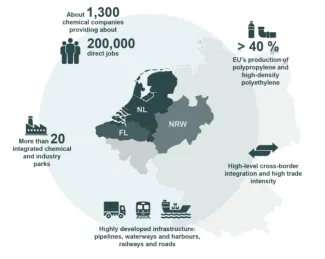
VITO/Energyville from Flanders (Belgium), DECHEMA e.V. from Germany have published the final report of the project 3C-VaCS (Trilateral Chemical Region – Value Chain Structures). The report analyses the current state of the chemical industry in the trilateral chemical region consisting of Flanders, the Netherlands, and North Rhine-Westphalia, and shows which steps can ensure competitiveness and climate neutrality, despite the energy crisis and cost pressure.
On 13 May, 2026, the project partners presented the report to representatives of the European Commission and the Critical Chemical Alliance at a virtual event. It is intended to serve as a scientifically sound basis for industrial and climate policy decisions at the EU level.
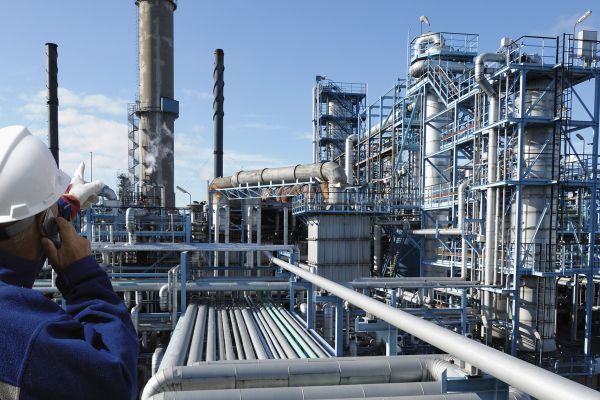
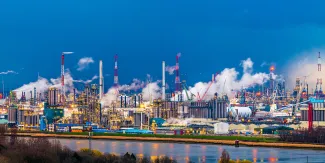
Steam crackers produce basic chemicals such as ethylene and propylene, which form the starting point of most chemical value chains and underpin a wide range of downstream products, from materials, pharmaceuticals and consumer goods to components essential for a climate‑neutral economy.
“The chemical industry of the trilateral region is a backbone of the European economy – but it is under enormous pressure. Our report shows that international competitiveness and transformation must go hand in hand if Europe is to preserve its industrial base while achieving its climate goals.”
- Dr. Florian Ausfelder, Head of the Energy and Climate Division at DECHEMA e.V. and one of the report’s authors.
Key findings
The final report provides an up-to-date and detailed analysis of the petrochemical value chain in the trilateral chemical region, which – starting from the steam cracker – forms a central foundation of chemical production. It also outlines possible development pathways up to 2050. Key findings include:
- The cost and energy crises of recent years have significantly weakened the competitiveness of European chemical production.
- Investments in climate-friendly technologies such as CO2 capture, electrification, and sustainable feedstocks are technically feasible but require reliable policy frameworks.
- The close interconnection of sites in Flanders, the Netherlands, and North Rhine-Westphalia creates synergies and strengthens supply chains as well as innovative capacity.
- However, this strong network also creates interdependencies: supply-chain disruptions in one region can affect the others, making diversification essential. The closure of individual facilities cannot be viewed in isolation.
- A coordinated, realistic Europe-wide infrastructure plan for electricity, hydrogen, and CO2 networks is a key prerequisite for successful transformation.
- Current policy frameworks are insufficient to support chemical industries to remain or become competitive throughout the energy transition. The report highlights several complementary options, in collaboration with relevant industrial stakeholders.
“Our study shows that coordinated planning is essential for a cross-border, cross-sector CO₂ and hydrogen network to minimise costs and avoid stranded assets. Such an integrated approach can provide structural support to Europe’s chemical clusters, helping to combat carbon leakage while strengthening industrial competitiveness.”
- Pieter Lodewijks, Program Manager Sustainable Energy Systems Assessment & Modelling at VITO/Energyville.
About the 3C‑VaCS Project
The Trilateral Chemical Region – Value Chain Structures (3C‑VaCS) project, funded by the Flemish and Dutch governments, the State of North Rhine-Westphalia, and the Chemical Industry Association of North Rhine-Westphalia (VCI NRW), was jointly carried out by VITO/EnergyVille, DECHEMA e.V. and TNO. Its aim was to develop new perspectives for a more resilient, climate-neutral, and competitive chemical production in Europe, based on industrial and trade data as well as techno‑economic modelling.