Europe funds climate-resilient drinking water supply
Seven pilot sites in Europe will test the drinking water supply of the future. In the newly approved NEW WATER project, water companies, knowledge institutions, and enterprises in Belgium, Germany, France, and the Netherlands will demonstrate how wastewater, rainwater, and heavily polluted surface water can be converted into safe drinking water. This is necessary because traditional drinking water sources are increasingly insufficient during the summer.
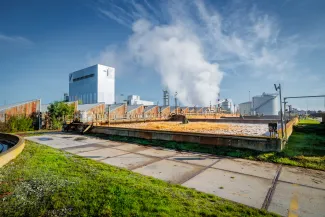
© Tiense Suiker / Raffinerie Tirlemontoise
The European subsidy programme Interreg North-West Europe allocated approximately 4 million euros for NEW WATER on 19 November. Drinking water companies such as Dunea (Netherlands) and De Watergroep (Belgium), businesses in Flanders and the Netherlands, as well as regional governments and knowledge institutions from France, Germany, Belgium, and the Netherlands, will investigate how we can produce pure and affordable drinking water from alternative sources. Climate change means that in many regions, there will soon not be enough water from the tap if we continue to rely solely on groundwater and surface water.
At pilot sites in Tienen, Dendermonde, The Hague, Almelo, Enschede, Trier, and Loudéac, NEW WATER will purify wastewater from a sugar refinery, a biomass digester, and food companies, alongside polluted surface water, rainwater, and domestic wastewater. After scaling up, the project will ensure the drinking water supply for tens of thousands of people.
The partners of NEW WATER will also develop training programmes for drinking water companies, industrial players, and governments looking to tap into new drinking water sources. Public campaigns should create support for these alternative sources.