Recap: Flemish-Dutch Knowledge Day on Wetlands
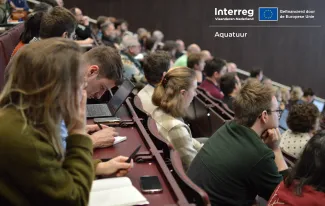
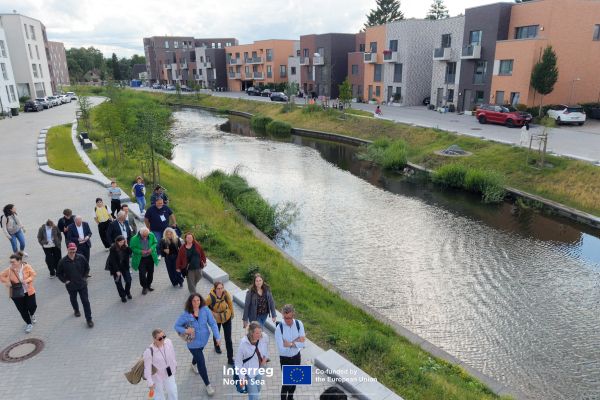
On 2 February 2026, area workers, regional coordinators, experts, policymakers, test centres, and consultants from Flanders and the Netherlands gathered in Brussels for the first Flemish-Dutch knowledge exchange day on wetlands and marshlands. This cross-border meeting focused on nature-based solutions to current water challenges such as water safety, water availability, and improving surface water quality. We worked through a combination of inspiring presentations, interactive break-out sessions, and in-depth exchanges of practical experience.
Wetlands as a Natural Asset for Water Issues
In the Low Countries, we face joint challenges: reduced surface water quality, flooding, and increasing periods of drought. Wetlands and marshlands offer significant added value here. They naturally purify water, buffer peak discharges, and store water in the landscape. This makes them an indispensable element for a sustainable and resilient water system for nature, agriculture, and industry.
During the knowledge exchange day, both Flemish and Dutch speakers provided accessible insights into how these systems work in practice, the opportunities they offer, and where the bottlenecks lie.
From Knowledge to Practice and Back Again
In the plenary session, we allowed domain experts to speak and used the extensive experience of the consortium to create a clear picture of the possibilities that wetlands offer. But we also delved deeper into the challenges, do's & don'ts, and the limits of these natural effect measures. View the presentations from this morning session:
- Setting the Scene and Welcome - Simon De Paepe
- Waterschap De Dommel - Mark Scheepens
- Herk and Mombeek - Bram Vandemoortel and Jan Vanvelk
- State of the Art: Natural Wetlands - Dimmie Hendriks & Frank van Lamoen
- State of the Art: Treatment Wetlands - Diederik Rousseau & Maarten Goegebeur
Wetlands in Motion: From Vision to Implementation
After the plenary session outlining the main themes – from potential and climate challenges to the strategic role of wetlands in Flanders and the Netherlands – it was time to delve deeper in the afternoon. In smaller breakout sessions, participants actively engaged in discussions about concrete applications, technical innovations, funding possibilities, maintenance and management issues, and (administrative) conditions. These sessions provided space for in-depth exploration, critical questioning, and practical experiences. Thus, the translation from scientific knowledge to practice took place.

Where are the Opportunities? Towards a Flemish-Dutch Potential Map
In this session, a central three-part question concerning wetlands was posed: where can it physically be done? Where is it desirable? And where is it practically feasible?
Participants combined relevant GIS layers, ranging from hydrological characteristics (watercourses, flood sensitivity, seepage zones) to water quality data, historical maps, projects, CIW wetland potential, regional plans, and ownership situation. To summarise these layers, a multi-criteria analysis can be employed, with varying criteria weighting depending on the type of wetland (natural or treatment wetland).
It is important that this map looks beyond mere water purification. Ecosystem services, drought sensitivity, overflow issues, and drainage intensity are also considered. The result should help policymakers and field actors make more targeted investments in locations where wetlands provide the greatest hydrological and societal returns.
Targeted Nutrient Removal: The Practice of Phosphate Adsorption Filters
In two well-attended breakouts, phosphate removal via adsorption filters took centre stage. Following a scientific introduction on the mechanism of adsorption – where factors like pH, temperature, and material properties are decisive – practical cases were presented.
The iron sand filter in the Groote Meer (Grenspark Kalmthoutse Heide) demonstrates that large-scale applications are technically feasible and can function well over several years. The Aquatuur case, Kraenepoel, will also employ a phosphate adsorption filter to improve the water quality of an ecologically valuable pond. Its design results from lessons learned from previous projects.
At the same time, questions remain. The lifespan of such filters is highly dependent on water quality and load, and long-term data is scarce. Additionally, sustainability and possible release of undesirable substances require further study. A life cycle analysis was mentioned as a valuable future research tool.
Wetlands and Pollution: Risk or Opportunity?
This session highlighted the relationship between wetlands and soil, waterbed, or groundwater pollution. Rewetting projects may unexpectedly encounter historical contamination, necessitating a careful approach: depending on the context, wetland restoration can lead to stabilization of pollution, but also to spread if processes are insufficiently controlled.
Within the LIFE Narmena project, pilot tests are conducted to tackle cadmium and chromium pollution through wetland development. These show that nature-based remediation techniques can deliver both ecological benefits and remediation gains.
Artificial purifying wetlands also offer potential. They allow for active control of geochemical conditions, thereby breaking down or fixing pollutants. Technically, these systems are often applicable; regulatory and policy frameworks currently pose more of a barrier.
Canal Systems as Future Wetlands
Agricultural ditches – designed for rapid drainage for centuries – were discussed as potential helophyte filters. With climate change and more intensive land use, the pressure on the current drainage system is increasing. Alternative design and management can improve both water availability and quality.
Potential measures range from widening and deepening to installing weirs and applying helophyte filters. Practical examples show there is already experimentation, but many questions remain about maintenance, water discharge, agricultural impact, and recognition as a nitrate reduction measure.
The discussion made clear that technical feasibility is just one aspect. Equally important are stakeholder involvement, policy adaptations, and reliable data on the effects on water quality, biodiversity, and yield. Additional stepping stones include education for farmers and citizens and the encouragement of agricultural initiatives.
An Integral View: Multifunctionality as a Key
In the session on the integral approach to wetlands, thirty propositions on hydrology, water quality, biodiversity, climate, economy, and governance were weighed. The conclusion was clear: wetlands deliver multiple ecosystem services simultaneously – from water buffering and quality improvement to recreational and economic benefits.
Participants viewed wetlands as successful experiments when functions are consciously combined. They also noted limited space as an important barrier in Flanders and the Netherlands, as well as a need for (partial) public funding.
The thread running through all sessions is clear: wetlands are not a niche tool, but a strategic part of future-oriented water management. The challenge lies not only in knowledge development but especially in smart spatial choices, policy alignment, and cross-sector collaboration.
Financing: What are the Possibilities?
Public funds are insufficient to achieve local and European objectives on the ground. By collaborating with companies investing in specific ecosystem services of wetlands – think of water retention or purification and carbon storage – win-wins can be realised.
That is one of the focal points of Natuurpunt's Wetland Plan. With the support of corporate partners, they restore wetland areas throughout Flanders. They demonstrated how Natuurpunt develops these projects and thus helps scale up wetland restoration.
Two important lessons learned: (i) public and private funds clearly leverage each other. Public funds often act as leverage to mobilise private funds. (ii) A clear scientific basis on water gains and other ecosystem services is necessary to mobilise companies towards investments.
Maintenance and Management: System Knowledge is Essential
From Golden September to the importance of water level inversion for the development of water-dependent nature: this session delved deeper into how to work with natural wetlands. What are the pitfalls? Where can gains be made? When is it best to perform maintenance on your water system?
The main takeaway: understanding your system is the foundation of good maintenance and management. A good understanding of your soil and water system is essential to make the right choices and avoid system errors.
Some concrete tips:
- Gentle slopes are ideal, but not everywhere. Not in the polder at the height of (former) creeks.
- Install weirs with a sufficient high range, just below ground level. Consider fish passability.
- Interpret and explore your entire system not only in a local working area but also look at broader gains. From valley to ridge! Because local water gains can mean a loss at the system level.
- Roomy and richly phased.
- September is the month to carry out work: reproduction is over and amphibians are not yet in winter sleep.
View on the Future
Thanks to the cross-border exchange of knowledge, practical experiences, and insights, we have taken a significant step towards a future where wetlands are an integral part of our water policy and landscape. The knowledge day demonstrated that these nature-based solutions not only improve water safety and quality but also create opportunities for innovative applications and regional collaboration. Let's maintain this momentum, continue the dialogue, and accelerate the translation into concrete actions – for resilient water systems in Flanders and the Netherlands.
Want to know more? Or interested in collaboration on this topic? Drop us a line!
This cross-border knowledge day was organized by VITO Kennispunt Water and co-facilitated by OVAM and INBO. The initiative also relied on many strong supporters: