VITO and RMI map out how Odisha (India) could supply cost-competitive green ammonia to Northwest Europe, including Antwerp-Bruges
The prefeasibility study concluded by RMI in collaboration with VITO signals opportunity for at least 1 million tons of annual Odisha, India-Northwest EU green ammonia trade by 2030.
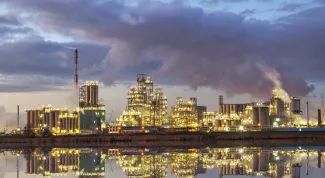
Rocky Mountain Institute (RMI) today released Unlocking an Odisha, India–Northwest Europe Green Ammonia Trade Corridor, a prefeasibility study developed in collaboration with VITO. The report was presented at the Bharat RE Summit 2026 in presence of leadership of India’s Ministry of New and Renewable Energy (MNRE) and the Solar Energy Corporation of India (SECI).
RMI has led the corridor coordination, industry engagements and the study, with VITO providing strategic and technical support on European demand and infrastructure. The findings draw on almost two years of convening and input from more than 20 organisations, including European off-takers, Indian producers, port authorities, infrastructure developers, and demand aggregators. This initiative is supported by the New Energy Industrial Strategy Center (NEIS Center).
The report finds that green ammonia trade between India and Europe can advance both regions’ priorities, offering European industry secure, affordable clean molecules while providing Indian producers the export-oriented demand they need to scale. The study assesses the conditions under which the Indian state of Odisha can supply industrial clusters in Antwerp-Bruges, Hamburg, North Rhine-Westphalia, and Rotterdam, and what it would take to move the first substantial volumes as early as 2030.
"Odisha, India - Northwest Europe green ammonia corridor represents a significant opportunity for India and Europe to advance their strategic priorities together. For India, it can unlock investment, scale green ammonia production, and strengthen its position in emerging global clean energy markets. For Europe, it can provide access to competitive, diversified supplies of green molecules needed to transition European heavy industry and transport in a competitive way while strengthening energy security. By connecting these complementary strengths and players across the whole value chain, the corridor can turn shared ambition into a durable clean energy partnership by enabling the first commercial agreements and projects to happen by 2030”
- Oleksiy Tatarenko, Senior Principal, RMI
Key findings
- Odisha, India can supply cost-competitive green ammonia to Northwest Europe. The state has attracted more than 6.5 million tons per year of announced capacity across eight developers, and about 0.8 million tons is under construction. Analysis estimates that RFNBO-compliant green ammonia from Odisha could land at Northwest European ports for about €665–€774 (US$755–US$879) per ton, making India an attractive source for European buyers.
- European refineries may offer the earliest demand anchor for imported green ammonia. Refineries already use hydrogen and the EU’s Renewable Energy Directive III (RED III) sets targets for renewable hydrogen in transport fuels. While refineries are looking into on-site electrolysis and other domestic-based options to help them comply with the directive, imported green ammonia could offer a complementary compliance pathway.
Germany supports its transport quota with noncompliance penalties, and refineries in Hamburg and North Rhine-Westphalia could need about 0.8 million tons of green ammonia by 2030 if they were to meet their share entirely through imports. Using hydrogen cracked from Indian green ammonia would add an estimated €30–€90 per ton of fuel, mostly below Germany’s penalty of €88–€210 per ton. Demand from fertiliser, chemical, and maritime shipping could follow. - Value chain coordination is the main barrier. The four clusters of Antwerp-Bruges, Hamburg, North Rhine-Westphalia, and Rotterdam already consume about 1.8 million tons of hydrogen a year, nearly all of it from natural gas. However, slow national transposition of EU renewable fuel targets and lagging import and cracking infrastructure are holding back demand uptake for clean molecules. The market is also at an impasse because each player is waiting on another. Off-takers will not sign long-term contracts without cost-competitive supply and infrastructure that can serve them. Midstream developers will not take a final investment decision (FID) without contracted throughput. Producers cannot reach financial close without creditworthy offtake. A coordinated corridor breaks that cycle by aggregating demand, aligning timelines, and showing where public support is needed to close the remaining cost gap.
“For Northwest Europe, the opportunity is to diversify supplies of clean molecules while supporting industrial competitiveness. Realising this potential requires European buyers, ports and infrastructure developers to work together to aggregate demand and align investment timelines. This study provides an independent evidence base for those decisions and a foundation for turning a promising trade route into concrete projects,”
- Pieter Lodewijks, Programme Manager at VITO
Next, RMI, with support from VITO, plan to lead a full feasibility assessment and launch a formal Odisha, India–Northwest Europe corridor coalition. The work will transition from whether the corridor can work to what it takes to build it. That means firming up buyer volumes and willingness to pay, shortlisting investment-ready Odisha projects, aligning production and infrastructure timelines, and structuring commercial arrangements that can carry projects to FID.
Read the full prefeasibility study
Organisations interested in joining the coalition can contact Oleksiy Tatarenko at otatarenko@rmi.org.