Young people reflect on the world of tomorrow with the EDUbox Toekomstgeletterdheid (Future Literacy)
VITO contributes expertise on sustainable agriculture and food
What will the world of tomorrow look like? And what role do science, technology and innovation play in the choices we make today? Thinking about the future is becoming increasingly important as societal challenges such as climate change, food security and biodiversity grow more urgent.
With the EDUbox Toekomstgeletterdheid (Future Literacy), VRT aims to help young people think critically about possible futures. VITO actively contributes to this new EDUbox concerning the future(s) of food by sharing its expertise in sustainable agriculture and food production. In a video included in the EDUbox, Kristof Van Tricht, Earth Observation expert at VITO, explains how satellites, drones and artificial intelligence can make agriculture smarter, more sustainable and future-proof. In this way, young people learn how innovative technologies can help produce enough food for everyone while reducing the impact on nature and climate.
EDUbox Toekomstgeletterdheid: Exploring the future(s) of food
Although no one knows what the future will look like, people have been trying to look ahead for centuries. Often, a single future is presented, as if everything were already predetermined and we no longer have any influence. That may sound like a bleak idea — but is it really true?
In the EDUbox Toekomstgeletterdheid: The future(s) of food, young people are introduced to the concept of futures literacy: the ability to understand, explore and consciously engage with multiple possible futures. They learn that there is not just one fixed future, but a whole range of possible scenarios. This helps them look more critically at the present and make more conscious choices about the future they want to help shape.
The EDUbox is a digital learning package for secondary school students and combines texts, videos, assignments and an interactive tool. Step by step, students discover what futures literacy is, which future-oriented roles exist, and how they can use both their imagination and critical thinking skills.
Food as a common thread
The skill of thinking about the future can be applied to many societal themes: politics, technology, education, health and more. In this EDUbox, students practise futures thinking using a familiar and topical theme: food.
Food is closely linked to major societal challenges such as climate change, biodiversity loss, health, fair income for farmers and global inequality. At the same time, many future images are circulating — from futuristic kitchens and vertical urban farms to plant-based alternatives and technologically produced meals.
These images of the future are never neutral. They are shaped by companies, policymakers, researchers and influencers, each with their own interests and perspectives. In this EDUbox, students learn to look at these images critically and to ask targeted questions about them.
In the future, additional themes will follow to practise futures literacy, such as humanoid robotics.
Looking beyond tomorrow
By working with young people on futures literacy and food, schools help build a generation that looks beyond tomorrow. Students discover that their voice, imagination and choices matter. Whether it concerns what is in their lunchbox, which innovations they support or which stories about the future they believe in, they learn that they are not just spectators, but co-architects of the world of tomorrow. The EDUbox Toekomstgeletterdheid provides them with the tools to take on that role consciously — critically, creatively and with hope.
How is the EDUbox Toekomstgeletterdheid structured?
The EDUbox Toekomstgeletterdheid consists of five parts, which students can complete in two lessons.
Part 1: Thinking about the future(s)
In the first part, students are introduced to futures thinker Thomas D’hooge, their guide throughout the EDUbox. Through a playful assignment, they experience that the future can never be fully predicted. They become familiar with the concept of futures literacy, discover four future roles (navigator, observer, cartographer and explorer) and discuss in class why different ways of looking at the future are important.
Part 2: The future(s) of food
This part focuses on food as a practice field for futures thinking. Students compare eating habits from the past with those of today and realise how quickly norms around food can change. They learn the difference between a single future image (the straight line) and a range of possible futures, informed by trends, data from the past and uncertainties. Guided by Thomas D’hooge, they learn to think in scenarios and chains of consequences.
Part 3: Getting started
In the third part, students apply their new insights using an interactive tool. They watch The News of the Future, a fictional news broadcast from the year 2068, and work in groups to explore the possible consequences of a specific news item.
Part 4: Futures thinkers
In part four, students meet futures thinkers from Flanders who are already working on the world of tomorrow today.
Karen Verstraete from ILVO (Institute for Agricultural, Fisheries and Food Research) explains how researchers are working towards more sustainable food production and which challenges they face along the way.
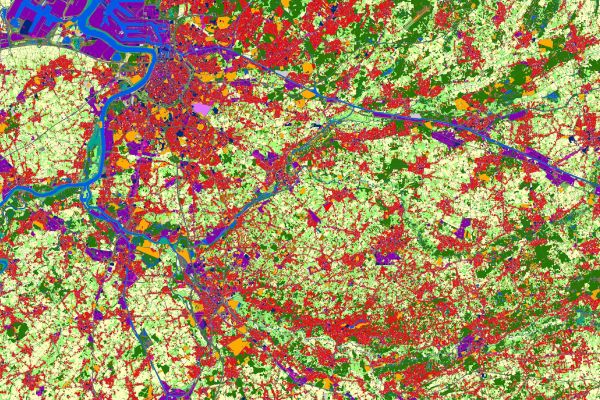
In addition, VITO shows how technology and data play a key role in the future of agriculture. By using satellite imagery, drones and artificial intelligence, VITO supports farmers and policymakers in working more efficiently and sustainably in food production. In this way, VITO contributes to a future-proof food system that produces enough food while respecting nature and climate.
Finally, futures thinker Ben Robaeyst inspires students to consider a role as a futures researcher and introduces them to the possible education and career paths in this field.
Part 5: Want to know more?
The final part brings together a series of in-depth links, carefully selected for students who want to learn more about futures literacy.
For teachers
The EDUbox Toekomstgeletterdheid is available free of charge as an interactive website and as a downloadable PDF in the EDUbox catalogue. Both formats encourage independent group work in the classroom.
The EDUbox includes a comprehensive teacher’s guide with additional background information, practical tips, learning objectives and suggestions for differentiation.
Supported by strong partners
The EDUbox Toekomstgeletterdheid is the result of a collaboration between VRT, Brightlab, Erasmushogeschool Brussels, imec, Mediawijs, RVO-Society, ILVO Flanders, Ghent University, VITO and futures thinker Thomas D’hooge. Their combined expertise ensures that the EDUbox is firmly grounded in up-to-date scientific insights as well as in the everyday reality of young people.
The interactive tool was developed by Tree Company.
More about EDUbox
EDUbox is an educational concept developed by VRT to introduce young people to societal themes. Through fact sheets, videos, assignments and interactive tools, each EDUbox aims to inform, inspire and encourage students to actively engage with the topic. The teaching material is free to use and supports teachers in working towards cross-curricular learning objectives.
Previous EDUboxes have covered topics such as critical thinking, mental wellbeing, digital balance, and war and peace. With the EDUbox Toekomstgeletterdheid, a new theme is added that helps teachers bring futures thinking into the classroom in a concrete and accessible way.