EASY: Electrochemical Ammonia SYnthesis
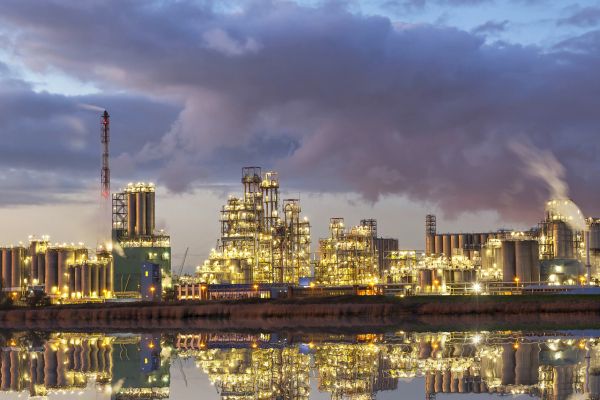
The EASY (Electrochemical Ammonia SYnthesis) project is revolutionising ammonia production by advancing aqueous electrochemical nitrogen reduction from lab concept to practical application. Unlike the traditional, carbon-heavy Haber-Bosch method, EASY uses a sustainable approach to create ammonia from air and water, effectively harnessing renewable energy without the need for high pressure or temperature. This new method sets a standard for safe and decentralised ammonia production, tailored for intermittent energy sources.
A sustainable alternative to the carbon-intensive Haber-Bosch process
The EASY project will develop a sustainable and intermittent ammonia production process that can respond flexibly to the availability of renewable energy, and bring this technology from TRL 3 to TRL 6. This process offers an alternative to the carbon-intensive Haber-Bosch (HB) process.
Moving away from the high-pressure, high-temperature, industrial and continuous HB process, the proposed process applies direct electrochemical ammonia synthesis (EAS) from air and water under ambient conditions, making it compatible with intermittent renewable electricity. Its modular deployment sets a new benchmark for safe, sustainable and decentralised ammonia production.
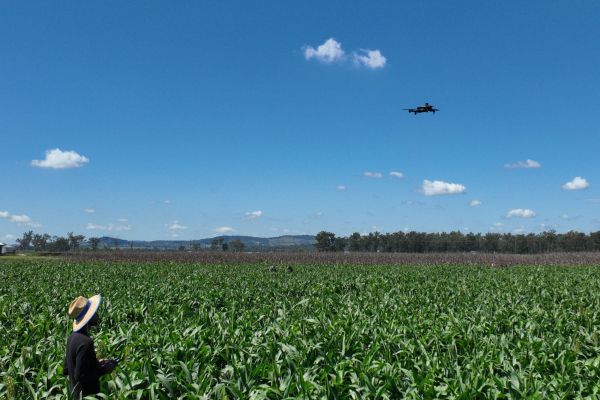
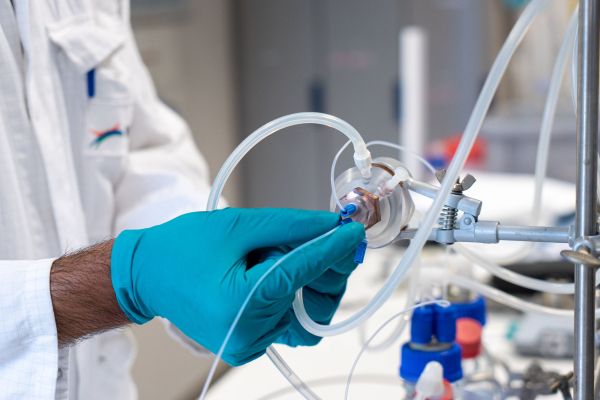
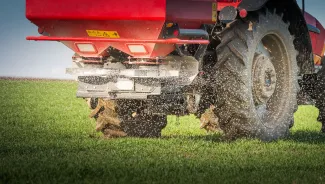
Building on the Horizon Europe project VERGE, which demonstrated proof-of-concept ammonia production based on the nitrogen reduction reaction (NRR) in an electrocatalytic flow cell (TRL 3), EASY will optimise the process parameters in the 10 cm² cell and scale it up to a 400 cm² prototype. In parallel, the project will advance separation and concentration units for ammonium sulphate and ammonium phosphate and validate agricultural feasibility on an experimental farm.
Towards a market-ready and competitive process
By its conclusion, EASY will deliver a TRL 6 system and prepare a business plan and regulatory framework for hybrid market entry into the fertiliser and e-fuel markets, which are projected to have demands of 200 Mt/year and 120 Mt/year respectively by 2035.
EASY will achieve these objectives through electrocatalysis optimisation using design of experiments and machine learning, combined with electrochemical cell optimisation via CFD (computational fluid dynamics) simulations. This methodology accelerates performance improvements while targeting 32 MWh/t NH3 for niche markets and ultimately 12 MWh/t NH3 for large-scale competitiveness.
VITO's role in EASY
VITO's know-how and infrastructure in electrode development, CFD modelling, and system integration and upscaling will be utilised in this project. VITO contributes to the development of novel, robust electrodes, the integration of the electrocatalyst therein and the upscaling of the electrodes to 400 cm². Furthermore, VITO is involved in the design and construction of the upscaled electrochemical reactor, and its optimisation via CFD simulations.