Pesticides in Flemish soil: VITO helps reduce blind spots in soil knowledge
There is already a lot of information about pesticides in water and food. But what residues remain in our soil? To reduce this knowledge gap, VITO, on behalf of OVAM, examined 118 soil samples at 100 locations in Flanders. The first exploratory monitoring campaign provides new insights into the presence of pesticide residues and serves as a starting point for more targeted soil monitoring.
Historical pesticides persist in the soil
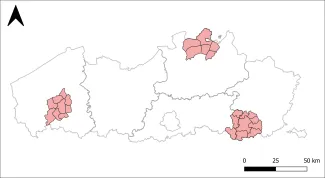
The researchers collected soil samples in January 2026 from agricultural plots, private gardens, nature reserves, public green spaces, and recreational areas. The locations were scattered across three regions with different soil types and agricultural activities: central West Flanders, the Noorderkempen, and Haspengouw.
In 44% of the samples examined, at least one pesticide or degradation product was found above the reporting limit. These were mainly historical organochlorine pesticides, such as DDT and their degradation products. Although these substances have not been used for a long time, due to their persistent nature, they can remain present in the soil for many years.
Currently available pesticides were found less frequently. The samples were deliberately collected outside the growing season to primarily capture residues that remain for longer periods.
From pesticide measurements to health risks
Measuring which substances are present is the first step. But what do the measured concentrations mean for health? There are no general Flemish soil remediation standards for pesticides in the soil. Therefore, VITO established indicative threshold values for historical organochlorine pesticides. By combining the expertise of soil researchers with that of the VITO health research department, potential health risks could also be assessed.
The results are predominantly reassuring. However, exceedances were recorded in scenarios involving the consumption of eggs from home-raised chickens in four private gardens. These findings underscore why, alongside the presence of a substance, potential exposure routes are important in assessing soil contamination.
Towards a broader perspective on soil quality
The study is part of a broader evolution in soil research. In addition to classical soil contamination, there is increasing attention at both the Flemish and European levels for diffuse contamination, lesser-known substances, and the monitoring of general soil health.
VITO has been supporting authorities such as OVAM and the Flemish Environment Agency (VMM) for many years with scientific expertise in soil and water quality. This knowledge helps to interpret measurement results, assess potential risks, and underpin research and monitoring strategies.
The results of this initial exploratory campaign highlight where further research could be valuable. The research report recommends, among other things, targeted follow-up of private gardens. Historical contamination, exposure risks, and potential spread through soil movement also warrant further attention.
In this way, VITO contributes to a better-substantiated monitoring of soil quality, with attention to both the environment and human health.
Read the study’s results in the OVAM press release (Dutch).