SMART-C-Hub: SMR & Thermal Storage for Carbon-Neutral Industry Hub
SMART-C-Hub develops and evaluates an integrated heat-hub concept that connects Small Modular Reactors (SMRs), high-temperature thermal energy storage and industrial heat networks. Using real data from the North Sea Port cluster, the project investigates how reliable, affordable and low-carbon heat can support the decarbonisation of energy-intensive industry. The resulting models, decision-support framework and implementation roadmap will be designed for replication in other Belgian and European industrial clusters.
What's the SMART-C-Hub-project about?
Energy-intensive industrial clusters need to cut carbon emissions while maintaining access to reliable and competitively priced process heat. This is particularly challenging for high-temperature and continuous industrial processes, where electrification is not always the only or most suitable pathway.
SMART-C-Hub explores how Small Modular Reactors (SMRs) could provide low-carbon industrial heat when combined with high-temperature thermal energy storage (TES). The storage system acts as a buffer between a stable heat source and the variable heat demand of several industrial users. This can increase flexibility, separate the nuclear and industrial systems functionally, and support the efficient distribution of heat across a shared industrial network.
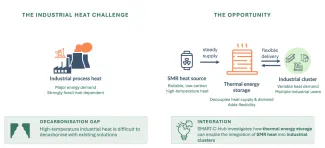
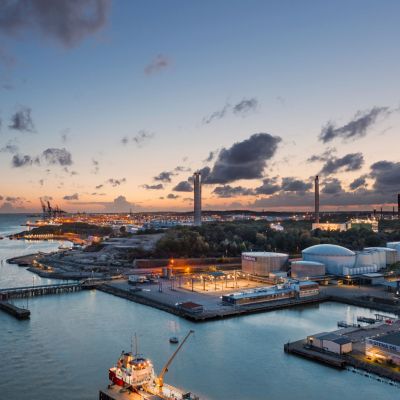
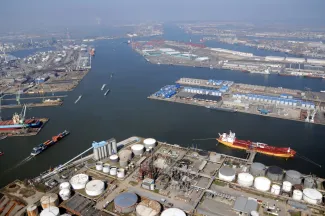
The project uses North Sea Port, with a focus on the Ghent port area, as its reference case. Based on real cluster data, the consortium will characterise current and future industrial heat demand, model and optimise thermal storage concepts, define the technical architecture and interfaces of an integrated SMR-TES heat hub, and assess economic, environmental, regulatory and societal feasibility.
SMART-C-Hub will deliver a parameterised decision-support framework and a phased implementation roadmap. These outputs will help industrial clusters compare SMR-TES heat hubs with other decarbonisation options and identify the technical, regulatory and investment conditions required for future deployment. The project does not design or deploy a reactor. Its focus is the analytical definition, optimisation and assessment of safe, scalable and transferable integration concepts for industrial heat.
VITO's role in SMART-C-Hub
VITO coordinates SMART-C-Hub and leads the work on high-temperature thermal energy storage and the sustainability and regulatory assessment of the integrated concept. VITO will model, benchmark and optimise molten-salt and packed-bed thermal storage concepts, using advanced flow and heat-transfer modelling as well as topology-optimisation methods. In addition, VITO will translate the technical results into techno-economic, environmental and decision-relevant insights, including cost and CO₂ indicators, regulatory conditions and comparisons with alternative industrial decarbonisation pathways.
By combining component-level engineering with system-level sustainability assessment, VITO connects storage design, industrial integration and strategic decision-making. This integrated expertise will help turn an emerging concept into a robust evidence base for future demonstration, pre-FEED studies and investment decisions.
Project partners
- Ghent University
- North Sea Port / Smart Delta Resources
- John Cockerill Renewables
- ENGIE Electrabel
- Storabelle
External advisor: Tractebel Engineering