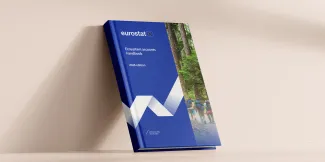
New European handbook helps incorporate the value of nature into policy and economic decisions
How can the value of nature be made visible in decisions concerning the economy, land use and climate? Natural Capital Accounting (NCA) or ecosystem accounting provides an answer to this. The new European handbook, developed by experts under the leadership of VITO on behalf of the European Union’s statistical office (Eurostat), provides European Member States with specific guidelines for putting this approach into practice.
Ecosystems such as forests, grasslands, dunes and peatlands provide essential services. They purify water, regulate the climate, store carbon, protect soils from erosion, support air quality, enable pollination and provide space for recreation. In addition, they provide natural resources such as water and biomass. Yet for a long time, these contributions were not systematically measured.
European legislation is set to change this. Member States are now required to report ecosystem accounts to Eurostat on an annual basis. The first reporting cycle will begin in 2026.
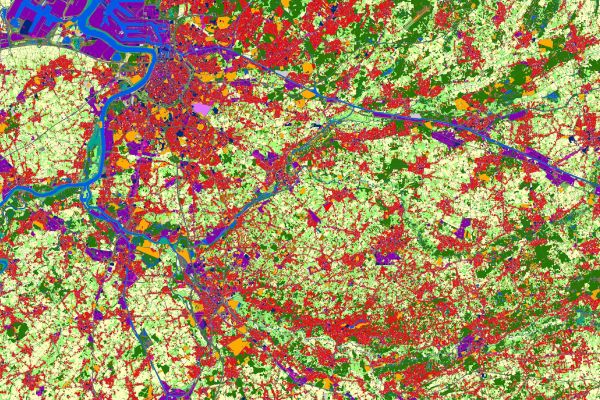
In practice, this means that Member States must systematically map their natural assets through ecosystem accounting. This brings together information on:
-
where the ecosystems are located and how much area they cover,
-
their condition and quality,
-
the services they provide,
-
and what these services mean and for whom, in physical terms, as a basis for economic valuation
This information makes it possible to explicitly factor the value of nature into economic and policy decisions.
VITO is helping to develop a European reference framework
Over the past five years, VITO has been working with the European Commission and partners to develop the methodology, tools and support for ecosystem accounting.
Central to this is the INCA methodology (Integrated Natural Capital Accounting), which structures nature data, tracks changes over time and establishes the link with human activities and the economy. It aligns with the UN Standard for Ecosystem Accounting (SEEA EA) and was developed with Wageningen University, the IDEEA Group and EFTEC (Economics for the Environment Consultancy), in collaboration with Eurostat, the Joint Research Centre (JRC) and the European Environment Agency (EEA).
The methodology was initially tested and validated by experts from ten Member States. Since 2024, VITO has been leading the follow-up process, during which the methodological guidelines were further refined. This work has now culminated in the publication of the first Eurostat handbook on ecosystem accounting.
Practical for all Member States
The handbook ensures that Member States can report in a consistent and comparable manner. With the support of a practical software tool (the INCA Tool, which is due for an update soon) and European datasets, they can implement this efficiently. In addition, the process provides for training, support and quality control, ensuring that the reported figures are reliable and comparable.
Read more about Natural Capital Accounting and VITO’s approach