BIOgBOUW: putting bio-circular solutions into practice
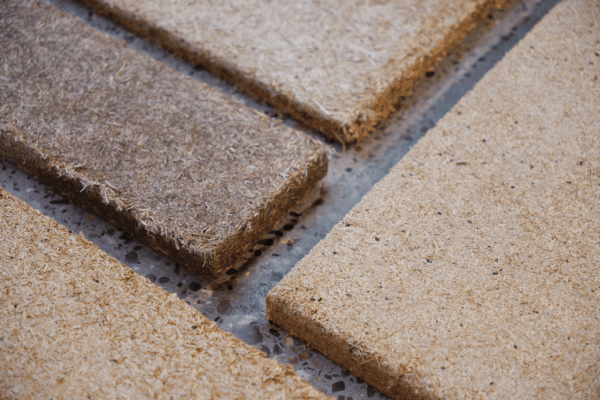
BIOgBOUW is a VLAIO COOCK+ project that supports the Flemish construction sector in its transition towards bio-circular building materials and construction systems with a lower environmental impact.
The project brings together Buildwise, Embuild Flanders, VITO and NAV to further scale up existing innovations, make knowledge accessible, and increase trust and market acceptance.
BIOgBOUW is organising three free, interactive workshops on LCA, EPD, B-EPD and TOTEM for producers and system providers of bio-based, geo-based or circular construction materials. View the programme for the workshops in November 2026, January and March 2027, and register for the full series.
The construction sector faces a major challenge. Today, it accounts for approximately 40% of energy consumption and 36% of CO2 emissions. Bio-based and geo-based materials offer significant potential to reduce this impact. However, their large-scale use is still too often hindered by uncertainty about performance, limited practical experience, a lack of recognised references and unclear guidelines.
BIOgBOUW addresses these challenges by scaling up existing and new bio-circular solutions, from innovative materials to complete construction systems. It does so by building scientific knowledge, testing and validating system performance, developing practical cases, and creating guidelines and implementation frameworks. In this way, the project strengthens confidence in bio-circular solutions and actively removes market barriers.
Short-term and long-term ambition
By 2030, BIOgBOUW aims for at least 20% of material choices in new construction projects and public procurement to be bio-circular. In the longer term, the project will contribute to a climate-neutral construction sector by 2050, in which bio-circular materials and systems are the norm rather than the exception.
How BIOgBOUW will achieve this
BIOgBOUW takes an integrated approach based on four pillars:
- Building knowledge: Collecting and sharing knowledge about bio-circular materials and systems, complemented by new insights from research and testing.
- Strengthening confidence: Validating performance through representative system tests, including fire safety, hygrothermal performance and acoustics, as well as practice-oriented evaluations.
- Recognition and market acceptance: Developing tools and evidence for specifications, procurement and certification, supported by reliable environmental data and sustainability indicators.
- Broad dissemination: Actively sharing knowledge and results with the sector through the networks of Buildwise, Embuild, NAV, VITO, Kamp C and Bouwunie.
Who is it for?
BIOgBOUW targets architects, contractors, manufacturers, specifiers and clients. In short, all stakeholders who play a key role in selecting, applying and scaling up bio-circular building materials and systems.
Workshop programme on LCA, EPD, B-EPD and TOTEM
BIOgBOUW is organising three free, interactive workshops specifically for producers and system providers of bio-based, geo-based or circular construction materials.
You will gain insight into LCA, EPD, B-EPD and TOTEM, assess where your product stands today and work step by step towards your own B-EPD.
View the programme for the workshops in November 2026, January and March 2027 and register for the full series.
How does VITO contribute to this project?
Within BIOgBOUW, VITO contributes its expertise in life cycle assessment (LCA), environmental impact and circularity assessment in the construction sector. We lead the work on environmental information and sustainability aspects. We also support manufacturers of bio-circular building materials in assessing their environmental performance in a well-founded and practical way.
More specifically, we guide manufacturers through the steps towards obtaining a Belgian Environmental Product Declaration (B-EPD) and using environmental data in TOTEM. We pay particular attention to topics that are relevant to bio-circular materials, such as biogenic carbon, system boundaries, circularity, and the link between environmental information and future regulations. The project also develops practical tools to improve the assessment and communication of environmental and circularity performance.
Would you like to know more about BIOgBOUW?
Feel free to contact John van Oorschot.