Mapping Europe’s ‘urban mine’: VITO provides key data on critical raw materials in European waste streams
As part of the European FutuRaM project, VITO mapped the composition and recovery potential of critical raw materials in slags, ashes and other waste streams, thereby laying an empirical foundation for future raw materials policy.
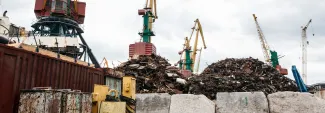
What is in our waste and what can we do with it?
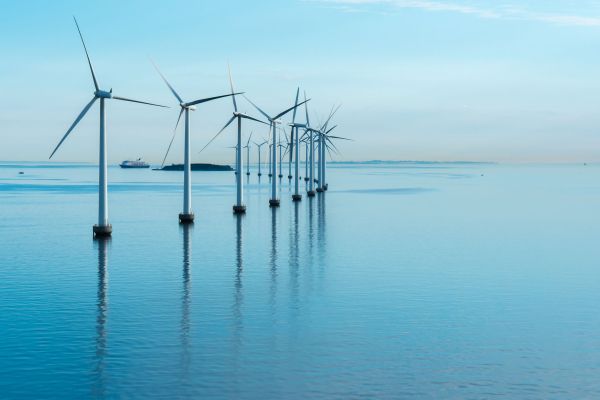
Cobalt from DR Congo, rare earth elements from China, platinum from South Africa: Europe today is largely dependent on imports from a handful of countries for the raw materials needed for batteries, wind turbines and electronics. This dependence creates risks, geopolitical, economic and for the security of supply needed for the energy transition.
But there is an alternative closer at hand than is often assumed. Every year, large quantities of critical raw materials are lost in European waste streams, materials that could be brought back into the economy through better collection and processing. The EU-funded FutuRaM project investigated exactly how large that potential is, and under which conditions recovery is feasible. VITO played a central role in this work.
From characterising residual streams to a CRM inventory: VITO maps industrial residual streams
Within FutuRaM, VITO was responsible for three key subtasks:
-
Characterisation of CRM-containing slags and ashes
Composition, quantification and the potential for CRM recovery from these industrial residual streams, which were included within a single analytical framework for the first time. -
Application of the UNFC framework
The UN framework (UNFC) provides a harmonised evaluation of the technical feasibility, socio-economic viability and level of knowledge on the composition and availability of recyclable raw materials in recycling projects. VITO contributed to the development of this officially recognised UN framework in earlier projects. In addition to further elaborating and improving the framework, VITO tested the UNFC framework through concrete case studies in several EU Member States and across multiple waste streams. -
CRM prioritisation
VITO developed a method to prioritise CRMs based on criteria that take into account the leverage effect of waste and materials policy, helping policymakers identify which raw materials deserve the greatest strategic attention.
4 to 6 million tonnes per year: the scale of Europe’s urban mine
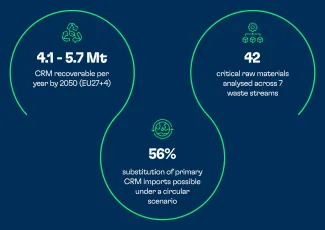
The figures from the final report are concrete. With well-designed policy and the right industrial choices, Europe could recover between 4.1 and 5.7 million tonnes of critical raw materials from waste streams every year by 2050, enough to substitute up to 56% of primary import demand for batteries, electronics, buildings, wind turbines and vehicles combined.
For some materials, this shift has already largely taken place: platinum and rhodium already have a recycling rate of 80%, because they are relatively easy to collect and process. For aluminium, copper, palladium and nickel, the rate ranges between 40 and 80%.
For strategically crucial materials such as cobalt, lithium and rare earth elements like dysprosium and neodymium, indispensable for electric motors and permanent magnets, the recycling rate can also approach 80% with the right policy framework.
A shared language for investors, the recycling sector and regulators
For industry, the implications are tangible. Producers of steel, non-ferrous metals, cement and glass that work with slags and ashes can now see precisely what recovery potential their residual streams contain, and how that potential evolves towards 2050.
Companies investing in recycling or urban mining technologies now have a harmonised reference framework to evaluate and compare projects, thanks to the UNFC adaptation that VITO helped develop. And for policymakers, VITO’s CRM prioritisation provides a tool for taking targeted measures focused on the materials that matter most.
The Urban Mine Platform: from one-off research to permanent monitoring tool
All data, methods and tools from the project are freely available. The consortium recommends institutionalising the Urban Mine Platform as a permanent European digital infrastructure, with mandatory reporting by all actors in the value chain and integration of multiple data sources. Anyone who wants to know which critical raw materials are available in which waste stream, in which country and under which scenario can already find that answer on the platform today.
Want to know more? Download the full final report of the FutuRaM project.