HORTA – High-performing Organic Redox flow bATteries
The HORTA project is bridging the gap between renewable energy generation and industrial stability by developing high-performance non-aqueous organic redox flow batteries (NAORFBs). This sustainable, modular technology reduces dependency on critical raw materials by utilizing locally sourced components for long-duration energy storage.
By advancing material innovation to a validated lab-scale prototype, we are establishing a resilient energy platform for Flanders and the EU. Ultimately, HORTA is carving a clear pathway for the next decade of large-scale commercial deployment across energy-intensive sectors.
Safe, sustainable long-duration energy storage
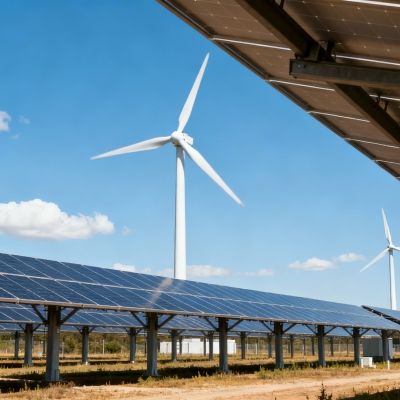
The rapid growth of renewable energy sources such as wind and solar is essential for achieving climate neutrality, but their intermittent nature creates significant challenges for grid stability and industrial energy supply. To enable large-scale integration of these renewables, long-duration energy storage (LDES) solutions will be needed in the next decade. Current technologies often rely on scarce materials or involve high costs, limiting their scalability.
Organic redox flow batteries (ORFBs) offer a promising alternative: they are safe, sustainable, and modular, and their active materials can be sourced and produced locally. This strengthens energy resilience in Flanders and the EU while reducing dependency on critical raw materials. Addressing this challenge is crucial for energy-intensive sectors such as chemicals, steel, and glass.
The goal
The HORTA project aims to develop a high-performing non-aqueous organic redox flow battery (NAORFB) technology that can serve as a competitive LDES solution for industrial and grid-connected applications. The project targets a technology readiness level (TRL) of 4 by delivering validated components and an integrated lab-scale prototype.
Rather than focusing on incremental improvements, HORTA seeks to establish a robust platform for future industrial demonstrations. By combining material innovation, system integration, and sustainability assessments, the project will provide a clear pathway toward commercialisation and large-scale deployment within the next decade.
Multidisciplinary approach
HORTA adopts a multidisciplinary approach that combines advanced molecular design, material engineering, and system-level optimization. Novel organic electrolytes will be developed to achieve high energy density and long-term stability, supported by computational modeling while focusing on scalable and sustainable synthesis routes.
Membranes and electrodes will be optimised for efficiency and durability, and integrated into an optimised lab-scale prototype to validate performance under realistic conditions. Beyond technical development, the project includes a comprehensive sustainability and techno-economic analysis to ensure industrial relevance. Collaboration with an Industrial Advisory Board and research partners guarantees alignment with market needs and accelerates technology transfer.
Expected impact and valorisation
HORTA will deliver a breakthrough in cost-effective, modular LDES solutions, enabling Flemish industry to achieve deep decarbonisation and meet Moonshot Path 4 targets. The technology has the potential to avoid significant CO2 emissions by replacing fossil-based electricity with renewable energy storage. Its local production and CRM-free design enhance supply chain independence and competitiveness.
Valorisation will occur through multiple channels: bilateral R&D with industrial partners, IP licensing to manufacturers, and potential spin-off creation. The project’s strong IP position and industrial commitment confirm market appetite and readiness for adoption. With successful TRL 4 validation, integration into industrial energy systems is expected within 5–10 years, supported by follow-up demonstration projects and policy uptake.
Project partners
The consortium is coordinated by VITO and brings together four partners with experimental and computational expertise in organic chemistry, electrochemistry and energy systems:
- KU Leuven leads WP1 on the synthesis and characterisation of organic active materials and solvents, combining experimental electrochemistry with modelling-guided screening.
- VUB leads WP3 on the development of innovative, stable membranes with a high ionic conductivity and low cross-over, integrating experimental testing with modelling and data-driven analysis.
- University of Antwerp leads WP4 on the integration of materials and components into an optimally working flow battery cell and stack, connecting materials research to real-world applicability.
- Next to its coordinating role, VITO leads WP2 on the development of innovative electrodes. VITO also leads WP5, studying the economic and sustainability aspects of the integration of redox flow batteries in the grid and energy markets. Finally, VITO is involved as a partner in WP1 and WP3.
The HORTA project is part of Moonshot, an industry-driven innovation programme of the Flemish Government that supports companies in reducing their CO2 emissions.