First deep geothermal drilling for Belgian sports complex started
VITO expertise contributes to energy transition in Flanders' sports infrastructure
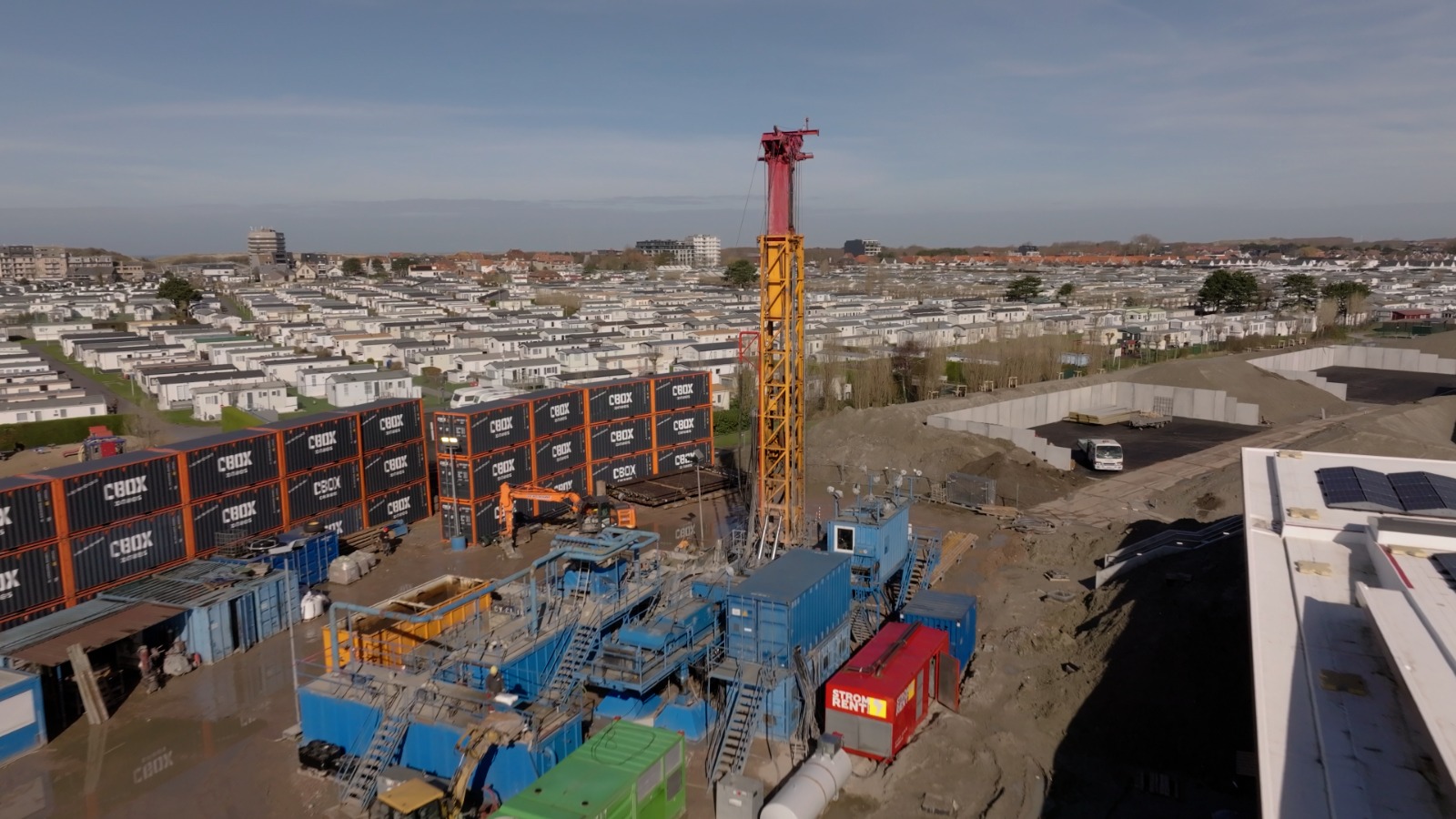
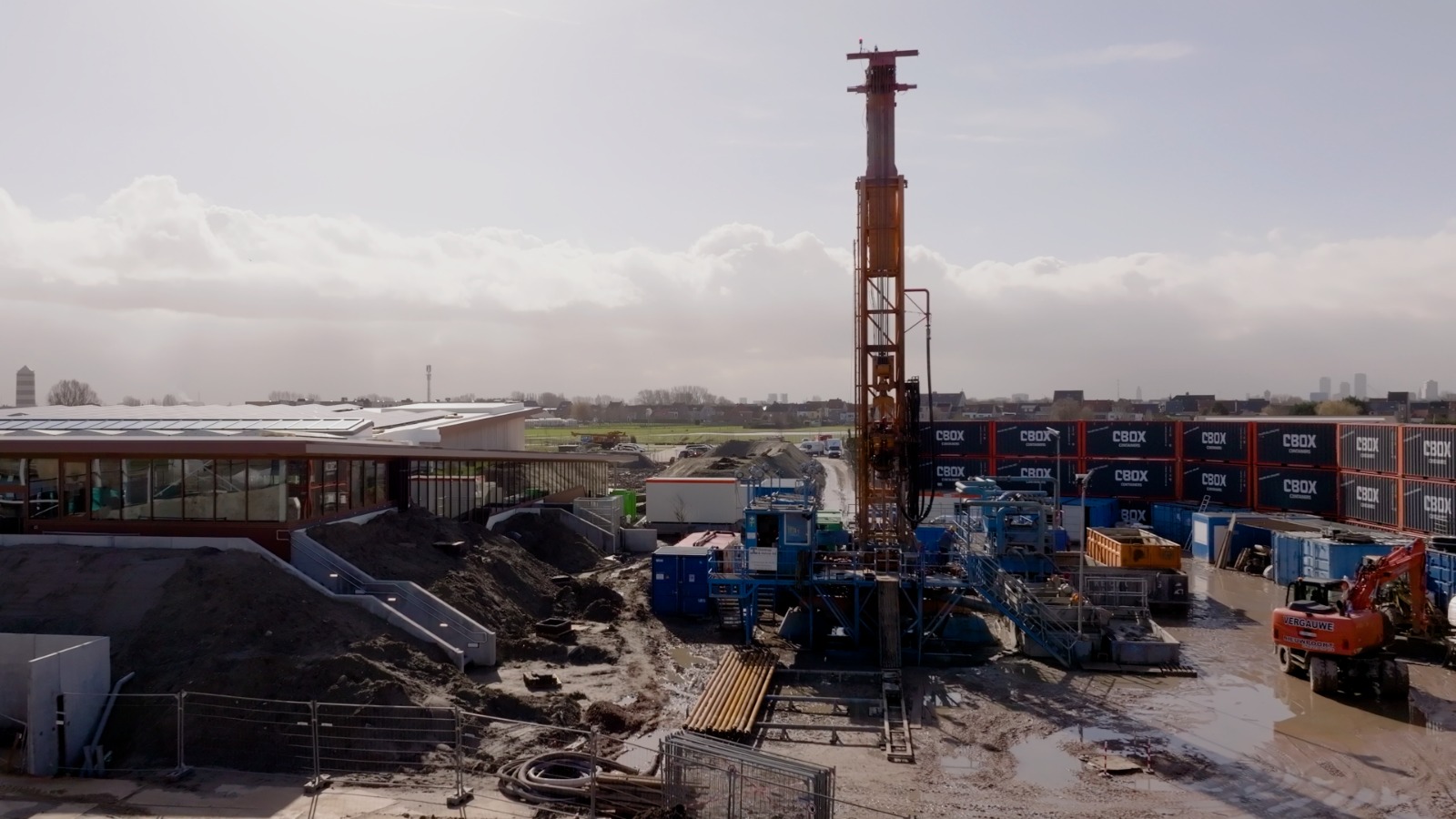
Early March, deep geothermal drilling has started for the new LAGO Bredene Grasduinen swimming and sports complex. A specialist company is drilling to a depth of 1,250 metres to generate geothermal heat. The system used, a so-called “single well”, is a world first in this set-up. ‘LAGO Bredene Grasduinen is a pioneering project. With this, we are placing our Flanders sports infrastructure at the forefront of the energy transition in Europe,’ said Diether Thielemans, managing director of LAGO, at the press conference on 3 March 2026.
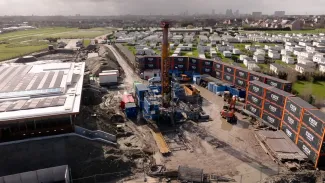
Drilling into a rock massif in the deep subsurface
After the preparatory studies and all the necessary applications, the practical preparations for geothermal drilling gained momentum at the end of 2025. Since the beginning of this year, the drilling rig on the site has been working day and night. The drilling work will take a total of about two months. First, the clay layers above the underlying Brabant massif are drilled through. Then a watertight casing is placed around the borehole. In the meantime, drilling continues at full speed into the rock massif.
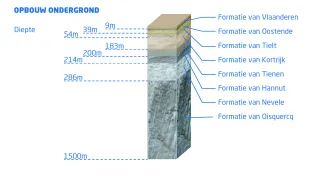
The drilling will reach a depth of 1,250 metres, equivalent to four Eiffel Towers. By way of comparison, geothermal drilling for a private home is 100 to 150 metres deep. This will generate sufficient heat for domestic heating. To heat a large swimming and sports complex such as LAGO Bredene Grasduinen, the drilling will be about 10 times deeper.
Water will flow down through a ground heat exchanger in the 40 cm wide borehole. The water is heated by conduction with the borehole wall and heat transfer from the deep subsurface. Once it has reached the right temperature, it is pumped up and transported to the swimming and sports complex. The heat exchanger will be installed in the borehole in March. Provided there are no geological setbacks – drilling to this depth has not yet been attempted on the Belgian coast – the swimming and sports complex will be able to extract heat from deep underground in the second half of March.
Unique collaboration
For this exceptional project, swimming pool group LAGO is collaborating with VITO, which is providing scientific support for the drilling work. The geothermal project is being coordinated and partly carried out by the Dutch company NotusPiD. The innovative single-well geothermal solution makes sustainable heat accessible in places where conventional geothermal energy is not feasible. The technology is ideally suited to urban and space-constrained locations, with minimal above-ground impact and a long service life.
"After projects at the domestic and international level, our internationally recognised experts in deep geothermal energy now have the opportunity to participate in this unique deep geothermal drilling project on the Belgian coast. Our geologists are involved from the preliminary study, through the permitting process, to the drilling itself. I am proud that VITO can apply its knowledge and experience in this sustainable swimming complex. Who knows, maybe this is the first of many?" - Inge Neven, CEO VITO.
Belgium's most sustainable multifunctional swimming centre
LAGO Bredene Grasduinen has a compact building that is insulated according to passive house standards. The technical installations were meticulously studied or redesigned to minimise their heat and electricity consumption. Here too, a new standard has been set.
Heat pumps will increase the temperature of the geothermally extracted heat, which is 25 to 30 degrees throughout the year, and thus provide all the necessary heat. The roofs of the swimming centre and the adjacent padel courts are completely covered with solar panels, seven times more than what Flanders requires. They will produce most of the necessary electricity.
This installation does not use fossil fuels, is extremely quiet and does not disturb nature or visitors of the recreation park. The multifunctional centre with its outdoor pools will be open 360 days a year. LAGO aims to attract 124,000 visitors and 200,000 lap swimmers annually. Nevertheless, total energy consumption will be limited to 1,700 MWh/year thanks to the combination of a passive house building, ultra-efficient technical installations, a unique deep heat source, and a large solar park. The reduction in energy consumption of more than 50% per visitor is a giant leap forward in making swimming and sports centres more sustainable.
“LAGO Bredene Grasduinen is a pioneering project. It combines a unique deep geothermal energy system with highly efficient technical installations. This puts Flanders' sports infrastructure at the forefront of the energy transition in Europe. The innovative approach reduces energy consumption per visitor by more than 50% and makes the complex completely fossil fuel-free. We are very proud to be opening this future-oriented sports and swimming paradise at the coast in April 2026." – Diether Thielemans, Managing Director.
"With LAGO Bredene Grasduinen, we are investing in sport, health and future-oriented infrastructure at the same time. This project shows how Flanders is pioneering and innovating: with sustainable technology, thoughtful integration into the environment and a strong focus on accessibility for all. And that extra swimming water is essential today, both for sports clubs, schools and recreational swimmers. I am particularly pleased that a modern, energy-efficient, and multifunctional sports and swimming complex is being built here on the coast, which is an example for future projects in all areas." – Annick De Ridder, Flemish Minister for Sport.